Does Ceramide Lip Balm Actually Repair Chapped Lips? The Complete 2026 Science Guide
If you've cycled through dozens of lip balms only to find your lips chap again within hours, the issue likely isn't your willpower — it's your ingredient choice. Most lip balms are built to slow down moisture loss temporarily. Ceramide lip balm is built to do something different: replace the lipids your lips are structurally short on in the first place. Below, we break down what the actual research says, why lips dry out faster than the rest of your face, how ceramides compare to other popular hydrators, what's really behind dark or pigmented lips, and a complete layering routine for 2026.
Before getting into ceramides specifically, it helps to understand why lips are uniquely vulnerable in the first place. This isn't marketing language — it's basic dermatological anatomy, and it's the reason lip-specific formulas exist at all.
Lips have almost no sebaceous glands. The rest of your facial skin produces sebum — a natural oily film that helps lock in moisture and buffer against the environment. Lips, by contrast, have little to no sebaceous gland activity, which means they have no built-in oil reservoir to draw on when conditions turn dry or cold.
Lip skin is dramatically thinner. Research on lip anatomy consistently shows that facial skin contains roughly 15–16 cell layers in its outer barrier (the stratum corneum), while the vermilion zone of the lips — the coloured part we call "lips" — contains only 3–5 cell layers. Some sources describe the lip's stratum corneum as up to 75% thinner than typical facial skin. Fewer layers means less of a buffer between the environment and the living tissue underneath, so damage from wind, cold, and dry air shows up faster and more visibly on lips than anywhere else on the face.
Lips contain fewer native ceramides. This is the detail most relevant to this guide. Lip-specific research has found that lips carry a different — and lower — ceramide profile than the rest of the body, with notably less of the ceramide subtypes (CER[NP] and CER[NH]) that are associated with strong barrier function, and more of the subtypes associated with a weaker one. Because ceramides are the primary lipid responsible for holding moisture in the skin, a lip with fewer ceramides simply cannot retain water as efficiently as the cheek or forehead can — no matter how often you apply balm.
Transepidermal water loss (TEWL) is significantly higher on lips. TEWL is the standard clinical measurement dermatologists use to quantify how much water evaporates through skin. Research comparing lip and cheek skin has found TEWL on the lip to run roughly three times higher than on the cheek — a striking gap that explains why lips feel dry again so quickly even right after you've moisturised them.
Lips have less melanin and almost no innate UV defence. Melanin is your skin's natural sunscreen, and lips simply don't produce much of it. That means UV rays reach living lip tissue with very little natural resistance — a detail that matters both for chapping and, as we'll get to later, for lip pigmentation.
Put all of this together and you get a part of the face that's thin-skinned, oil-free, lipid-deficient, and under near-constant environmental and mechanical stress (eating, talking, licking, weather) — which is exactly why standard moisturisers so often fall short.
Given that backdrop, the case for ceramide-based lip care becomes much clearer. Ceramides are a family of lipid molecules that make up roughly half of the lipid content in the skin's outer barrier — they function as the "mortar" that holds skin cells together and prevents water from escaping between them. When ceramide levels drop, whether from age, environment, or — in the case of lips — simple anatomical deficiency, the barrier becomes leakier and skin becomes drier, rougher, and more reactive.
This isn't a theoretical mechanism. It's been studied directly on lips. In a four-week clinical trial conducted by Kao Corporation researchers and published in the International Journal of Cosmetic Science, 31 women with normal skin used a lip balm formulated with synthetic pseudo-ceramide — deliberately designed without an occlusive (surface-sealing) effect, so any improvement could be attributed to the ceramide itself rather than a simple physical barrier. The study measured lip roughness scores alongside capacitance, transepidermal water loss, and lip surface elasticity over the four-week period. The pseudo-ceramide formula measurably reduced lip roughness and improved the lip's barrier readings compared to a blank control — and the researchers concluded that the improvement happened because the ceramide was absorbed into rough areas of the lip and corrected the underlying ceramide profile, rather than just sitting on top of it.
A related study from the same research group looked specifically at women with sensitive, dryness-prone lips and found that the pseudo-ceramide lip balm meaningfully reduced transepidermal water loss while increasing skin water content and visibly improving smoothness, concluding that the formulation was broadly useful both for people with reactive, sensitive lips and for everyday use by people with otherwise healthy skin.
A broader qualitative review of ceramide-containing formulations across multiple clinical studies reached a similar conclusion at scale: ceramide-based products were consistently found to reduce transepidermal water loss while improving the structure of the skin's outer barrier and increasing its lipid content compared to control or placebo treatments. That review also noted that when ceramide formulations were tested head-to-head against standard moisturisers or placebos, they performed as well as or better than the comparison product in every study reviewed.
The mechanism behind all of this comes down to a simple distinction dermatologists draw constantly: occlusion versus repair. Ceramides are essential structural lipids for normal skin barrier function, and when ceramide levels are reduced — as they are in dry skin and conditions like atopic dermatitis — water loss through the skin increases and symptoms worsen, while topical ceramide application has been shown to restore that barrier function and improve hydration by directly reducing water loss. A petroleum or wax-based balm, by contrast, works almost entirely through occlusion: it creates a passive film on the surface that physically blocks evaporation but does nothing to address the lipid deficiency underneath. That's the core reason so many people feel like they're "addicted" to reapplying balm every hour — the underlying barrier never actually gets repaired, so the moment the film wears off, water loss resumes at the same elevated rate.
One of the more reassuring findings across ceramide research is just how clean the safety profile is. In repeat-application irritancy testing on ceramide-based moisturisers, researchers found no adverse reactions of any kind among participants when the ceramide formula was tested directly on skin under semi-occlusion, supporting its classification as non-irritating and non-sensitising.
This matters specifically for lips because lip products carry a unique risk that face creams don't: partial ingestion. Every time you eat, drink, or lick your lips, a small amount of whatever you've applied ends up in your mouth. Ceramides have an unusually clean track record here precisely because they're a lipid your body already produces and recognises — they aren't a foreign or synthetic active that needs to be "tolerated," which is part of why they show up so consistently in formulas designed for sensitive, eczema-prone, or post-procedure skin.
For a lip balm specifically, this means a fragrance-free, ceramide-based formula is one of the safer categories to reach for if you have a history of contact reactions, perioral eczema, or lips that react to long-wear or matte lipstick formulas. Pairing ceramides with other barrier-supportive, low-irritation ingredients — like jojoba esters, which carry recognised anti-inflammatory and emollient properties, or niacinamide at a gentle concentration — tends to compound the calming effect without introducing new sensitisation risk.
This comparison comes up constantly, and the honest answer is that it's not really a competition — the two ingredients solve different problems and work at different depths of the skin.
Hyaluronic acid (HA) is a humectant. Its job is to draw water into the upper layers of skin and hold it there, which is why it delivers that immediate, visible plumping effect almost as soon as you apply it. The catch is that HA's effect is largely surface-level and temporary — it needs water to draw from (either from a serum/toner base or from the environment), and once that moisture evaporates, the plumping effect fades with it.
Ceramides work structurally. Rather than pulling water in from outside, they replace the lipid "mortar" that's missing from the barrier itself, which is why their benefits compound with consistent use rather than disappearing the moment the product wears off. This is also why ceramides are the better choice specifically for chronic dryness, flaking, post-exfoliation recovery, and the kind of lips that seem to chap no matter what you do.
The most effective 2026 lip routines don't pick one — they layer both, in a specific order: hyaluronic acid (or an HA-containing serum/toner) first, while lips are still damp, followed by a ceramide balm on top to seal that hydration in. HA floods the tissue with water; ceramide locks the door behind it so that water has somewhere to stay. Used in isolation, either ingredient does its job reasonably well. Used together, in the right order, they address both the immediate comfort problem and the long-term structural one.
A third ingredient worth knowing about for 2026 formulations is phytosphingosine — a naturally occurring sphingolipid (a close relative of ceramide) that's increasingly showing up in premium lip formulas because of its role in accelerating the healing of micro-cracks and its mild antimicrobial properties. It pairs well with ceramides and is particularly relevant if you're prone to cold sores, cracked corners of the mouth, or recurring lip infections.
Lip pigmentation — clinically called lip hyperpigmentation — is one of the most common lip-related concerns, and it's worth understanding the real causes before reaching for any product, since the right fix depends entirely on what's actually driving the darkening.
UV exposure is the single most common cause. Because lips contain very little melanin to begin with, they have almost no built-in defence against UV radiation. When lips are exposed to direct sunlight, the skin responds by triggering excess melanin production specifically to counteract UV damage — and because lip skin is so thin and so rarely protected with SPF, this effect tends to be more pronounced and more visible than facial tanning. This is also one of the more reversible causes, since consistent SPF use going forward can prevent further darkening even if it can't fully undo existing pigmentation.
Smoking is a major, well-documented driver — and a more aggressive one than most people realise. The mechanism is direct: nicotine and other tobacco-smoke chemicals stimulate melanocytes (the cells that produce pigment) largely independent of UV exposure, which is why heavy smokers can develop pigmented lips even with minimal sun exposure. One frequently cited oral health study found that lip and gum pigmentation scores in smokers measured, on average, seven times higher than in non-smokers — a striking illustration of just how dose-dependent and significant this effect can be. Smoking also causes chronic vasoconstriction (narrowing of blood vessels), which reduces blood flow and oxygen to lip tissue and contributes to a duller, less rosy appearance on top of the pigmentation itself.
Dehydration makes lips look noticeably darker — even without any actual increase in pigment. This is a distinct mechanism from melanin production, and it's the one most directly relevant to a ceramide-focused routine. When lips are dry, the surface texture becomes uneven and rough, which scatters light inconsistently rather than reflecting it evenly. Dry or chapped lips can genuinely appear darker and more uneven as a result, which is why keeping lips properly hydrated is essential to maintaining their natural colour. In other words: some "pigmentation" isn't pigmentation at all — it's a texture problem that hydration can resolve directly.
Harsh or low-quality lip products can trigger pigmentation through irritation. When lips react to fragrances, preservatives, or colourants in a balm or lipstick, the resulting inflammation can leave behind darkened patches as it heals — a pattern dermatologists refer to as post-inflammatory hyperpigmentation, and one of the more common but under-recognised causes of patchy lip darkening.
Caffeine, alcohol, and staining beverages contribute over time. Tannins in coffee and tea can directly stain lip tissue, while both caffeine and alcohol act as systemic dehydrators — compounding the dryness-driven darkening described above through a completely separate pathway.
Certain medications can cause pigmentation as a side effect. Some NSAIDs, tetracycline-class antibiotics, antimalarials, and select chemotherapy drugs are recognised causes of drug-induced lip pigmentation. If darkening appeared shortly after starting a new medication, that timing is worth mentioning to a doctor rather than assuming it's purely cosmetic.
Less commonly, pigmentation can signal an underlying health condition. Vitamin B12 or folate deficiency, iron-deficiency anaemia, and conditions like Addison's disease have all been linked to lip darkening in some cases. This is the exception rather than the rule, but it's worth knowing — particularly if pigmentation appears suddenly, is accompanied by other symptoms like fatigue, or doesn't correlate with any of the lifestyle factors above.
It's important to be precise here: ceramides do not block melanin production, and no amount of barrier repair will reverse pigmentation caused by UV damage, smoking, or medication. What ceramides do address is the dehydration-driven component of darkening described above — by restoring a smooth, hydrated lip surface, they remove the textural unevenness that makes lips look darker than their actual underlying tone. Many people who switch to a ceramide-based routine notice their lips look more even within two to three weeks, not because the pigment itself changed, but because the dehydration-related darkness resolved.
For pigmentation that's actually rooted in melanin overproduction — from sun exposure or smoking, for example — you need an ingredient that works on melanin directly, layered on top of (not instead of) a ceramide base.
If ceramides are the structural repair layer, blueberry extract is the brightening specialist — and unlike some lightening actives, its mechanism is well-supported by independent research rather than purely anecdotal.
The active compounds responsible for blueberry's effects are anthocyanins — the polyphenols that give the fruit its deep blue-purple colour. Topical application of blueberry-derived compounds has been shown to reduce UV- and pollution-induced skin inflammation, and blueberry anthocyanin applied to dermal fibroblasts has been found to reduce activation of NFkB, an inflammatory pathway that also drives collagen breakdown. Mechanistically, blueberry extracts appear to work by modulating both the NFkB and Nrf2 pathways — calming UV-triggered inflammation on one hand while boosting the skin's own antioxidant defences on the other. That second pathway matters for pigmentation specifically, since inflammation is one of the key drivers of post-inflammatory darkening, and calming it at the source helps prevent new pigmentation from forming in the first place.
Beyond their anti-inflammatory action, blueberry's anthocyanins are some of the most extensively studied antioxidant compounds for skin. Blueberries are particularly rich in antioxidants, including vitamin C and anthocyanins, which combat the free radicals generated by UV exposure and pollution — and by neutralising those free radicals, they help protect skin from the oxidative stress that accelerates visible ageing, while also helping fade age spots and even out skin tone. Part of this comes from ellagic acid, a compound found in blueberries that has been shown to directly inhibit melanin production — giving blueberry extract a genuine, mechanistic role in addressing pigment at the source, rather than just masking it cosmetically.
What makes this particularly relevant for lip use is that blueberry extract appears to support the same barrier function ceramides are working to repair. In addition to its anti-inflammatory and antioxidant effects, topical blueberry extract has also been associated with improvements in skin barrier function itself — meaning the two ingredients aren't just compatible, they're complementary: ceramide repairs the structural barrier, while blueberry protects that barrier from oxidative damage and works on the pigment sitting within it.
In a tinted lip oil, the depth of colour is a reasonably direct proxy for anthocyanin concentration — the deeper and more saturated the natural tint, the higher the active compound density in the formula. Used daily over a ceramide base, most people report visible improvement in lip evenness within four to six weeks, which lines up with the general timeline dermatologists cite for antioxidant-driven pigmentation correction on thin, fast-turnover skin like the lips.
Because ceramides work by physically integrating into the lip's lipid matrix rather than acting instantly on contact, timing matters more here than it does with a basic occlusive balm. Four windows in particular make the most of that mechanism:
1. Before bed — the most important application of the day. Overnight is when lips go the longest without disruption: no eating, no talking, no reapplying lipstick, no wind or sun exposure. That uninterrupted six-to-eight-hour window gives ceramides the sustained contact time they need to be properly absorbed into rough or compromised areas of the lip — which is exactly the mechanism the Kao Corporation lip studies measured improvement through. If you only apply ceramide balm once a day, this is the application to prioritise.
2. Immediately after exfoliating. Exfoliation is genuinely useful for removing dead, flaky skin from chapped lips, but it also temporarily strips and disrupts the barrier. Applying ceramide balm within minutes — rather than hours — closes that window before dehydration and irritation have a chance to set in.
3. Right after removing long-wear lipstick or matte formulas. Micellar removers and balm-based makeup removers are effective precisely because they dissolve oils and pigment — but that same mechanism strips surface lipids along with the colour. Reapplying ceramide balm immediately afterward replaces what was lost and prevents the overnight tightness and roughness that often shows up the morning after a full day in matte lipstick.
4. Before sun exposure, particularly through Indian summers. Since UV exposure is one of the primary drivers of both lip dryness and lip pigmentation, daytime protection matters as much as nighttime repair. Either choose a ceramide formula that also carries SPF, or layer a ceramide balm underneath a separate SPF lip product — an intact, well-hydrated barrier also tends to respond less severely to UV-triggered inflammation than a compromised one.
Putting everything above into a practical sequence:
Cleanse and prep. Remove any existing lip product with a gentle micellar cloth. If you're using a hyaluronic acid serum or toner, apply it now and give it about 60 seconds to absorb — this floods the lip tissue with water before the ceramide layer goes on to seal it in.
Apply a ceramide lip balm as your base, every time. A thin, even layer is enough since these formulas are typically concentrated. This is your repair layer and the one non-negotiable step in the routine, whether or not you're adding anything else on top.
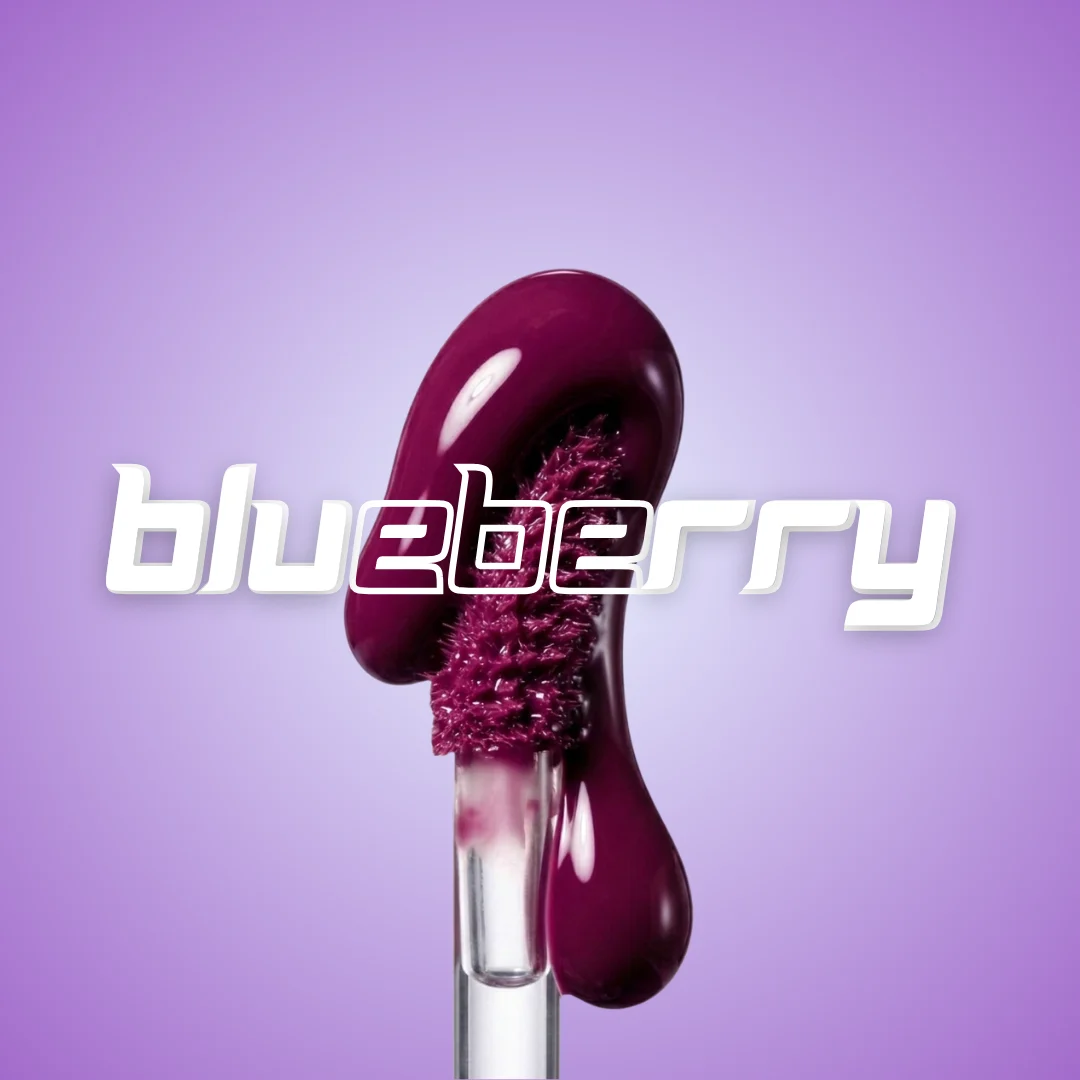
On pigmentation-focused days, layer an antioxidant-rich, blueberry-based lip oil on top. The anthocyanins go to work on melanin and inflammation while the ceramide base underneath keeps the barrier intact, allowing the brightening actives to actually penetrate healthy tissue rather than a compromised, dehydrated surface.
On colour-only days, swap in a tinted lip oil without the brightening focus for tint and hydration without layering in extra actives — useful if your lips don't need active pigmentation treatment that day but you still want the barrier protection underneath.
Reapply ceramide balm after meals and after any exfoliation, since both disrupt the surface lipids you've just worked to restore.
Medical Disclaimer: This article is written for informational and educational purposes only and does not constitute medical or dermatological advice. Cited studies and statistics are drawn from peer-reviewed research and published clinical literature; individual results vary. If you're experiencing persistent lip discoloration, pain, swelling, rapidly spreading pigmentation, or darkening that began after starting a new medication, consult a qualified dermatologist before beginning any topical treatment.